
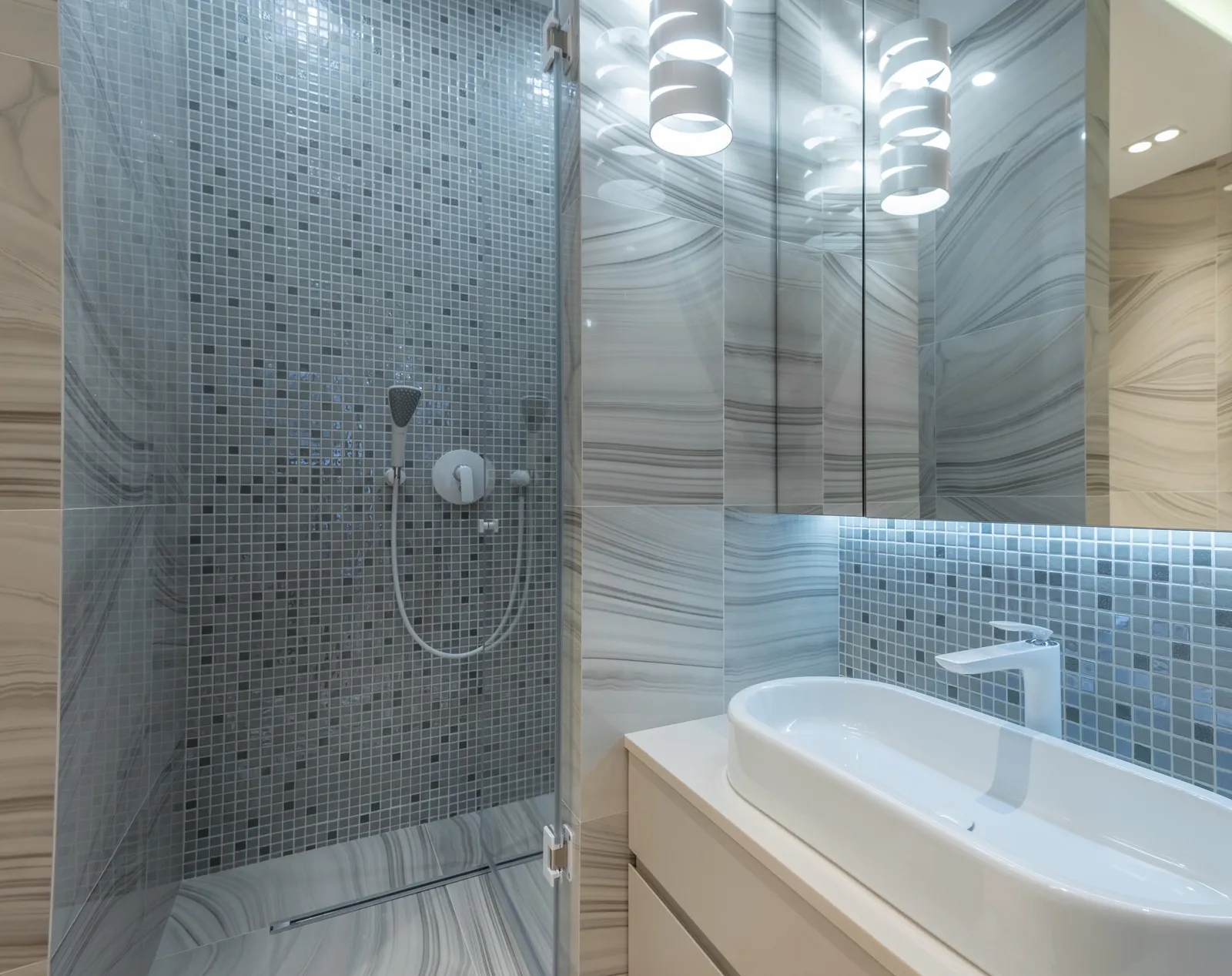
Grout occupies a small part of a tiled surface, yet it strongly influences the finished pattern and the maintenance conversation. Choosing it only after the tiles have arrived can turn a considered interior scheme into a rushed site decision. For a bathroom or kitchen project in Al Ahsa, compare the exact epoxy and cementitious products proposed, not just their generic names. Start with the tile, the use of the surface and the installer’s documented method, then approve a representative sample.
Distinguish the product families
MAPEI's grout guide separates epoxy, ready-to-use and cement-based products. It describes epoxy grout as nonporous and resistant to cleaning chemicals, while noting that cement grouts suit many applications. These broad descriptions do not make every product interchangeable. Obtain the current technical sheet for the exact locally supplied grout and check the stated uses, limitations and cleaning guidance with the installer. A bucket described as premium or waterproof is not a complete specification for your selected tile and location.
Describe the exposure and cleaning routine
Identify whether the surface is a shower wall, bathroom floor, kitchen splashback or dry living area. Explain the cleaning products and routine you expect to use, and ask the supplier to confirm suitability rather than promising resistance to everything. Where an unusual chemical exposure or demanding use is involved, request a specific recommendation supported by the product information. Keep the discussion practical: the relevant question is whether the chosen grout fits this surface and its care routine, not which family sounds more advanced.
Approve colour with a real tile sample
Prepare a small sample using the actual tile, joint arrangement and proposed grout colour. View it in the intended room lighting and from a normal distance. A close colour match can quiet the pattern, while a contrasting joint makes the layout more visible; choose intentionally. Record the product and shade reference on the approved sample. Do not rely only on a printed colour chart, particularly when the tile has texture, variation or reflective surfaces that change how the joint appears.

Check installation requirements before ordering
Have the contractor confirm the specified joint range, preparation, mixing and cleaning method for the exact product. Ask whether the team has used that system and how it will protect adjacent finishes. Avoid turning the manufacturer's working times into a universal rule for all products and site conditions. Record the method and responsible installer in the quotation. The aim is to buy an installed result, not a material that arrives on site with no agreement about who will apply it correctly.
Keep grout and other joint details distinct
Ask the designer or installer to identify where grout is specified and where a different joint treatment belongs in the approved system. Do not authorize filling every visible gap with the same material simply for a uniform colour. Similarly, obtain a separate description of the wet-area waterproofing system and its checks; a grout selection is not evidence that the complete assembly has been waterproofed. This distinction makes the scope clearer without asking the homeowner to design technical junctions or diagnose concealed construction.
Compare realistic maintenance and replacement
Request care instructions before approving the product, including suitable cleaning methods and any sealing requirements stated for that exact grout. Ask how a damaged section would be repaired and whether a colour match could vary later. Keep a record of the product and batch information supplied at installation. Avoid claims that a joint will never stain or never need attention. A useful proposal explains normal care and the limits of the product, allowing you to compare ongoing effort as well as initial appearance.
Inspect the sample standard at handover
Use the approved sample as the visual reference when reviewing the finished surface. Look for inconsistent colour, incomplete joints or residue that needs the installer's attention. Ask when the surface can enter normal use according to the product instructions and receive the care information in writing. Bunyady can coordinate this choice with tile layout, lighting and adjacent finishes. The result should be a deliberate joint specification that supports the room's design and expected use, rather than an unrecorded material chosen on installation day.
Your practical checklist
- Name the exact grout product and local technical sheet.
- Describe the surface exposure and cleaning routine.
- Approve a sample with the actual tile and lighting.
- Record the application and cleaning responsibilities.
- Keep waterproofing and joint details separately specified.
- Retain shade, batch and care information.
Frequently asked questions
Is epoxy automatically the right grout for every room?
No. Compare the exact product requirements with the tile, exposure and installation conditions. A product family name alone is insufficient.
Can grout colour be chosen from a screen?
Use a real sample before final approval. Tile texture, lighting and joint arrangement can change the perceived result.
Does choosing grout confirm that a bathroom is waterproofed?
No. Ask for separate evidence of the specified waterproofing system and its checks. The grout decision does not document the entire assembly.
Sources and further reading
Sources support the specific facts identified below. Planning examples and checklists are editorial guidance; photographs are illustrative.
- MAPEI — Manufacturer distinction between epoxy, ready-to-use and cement grouts. Confirm the exact locally supplied product technical sheet.