
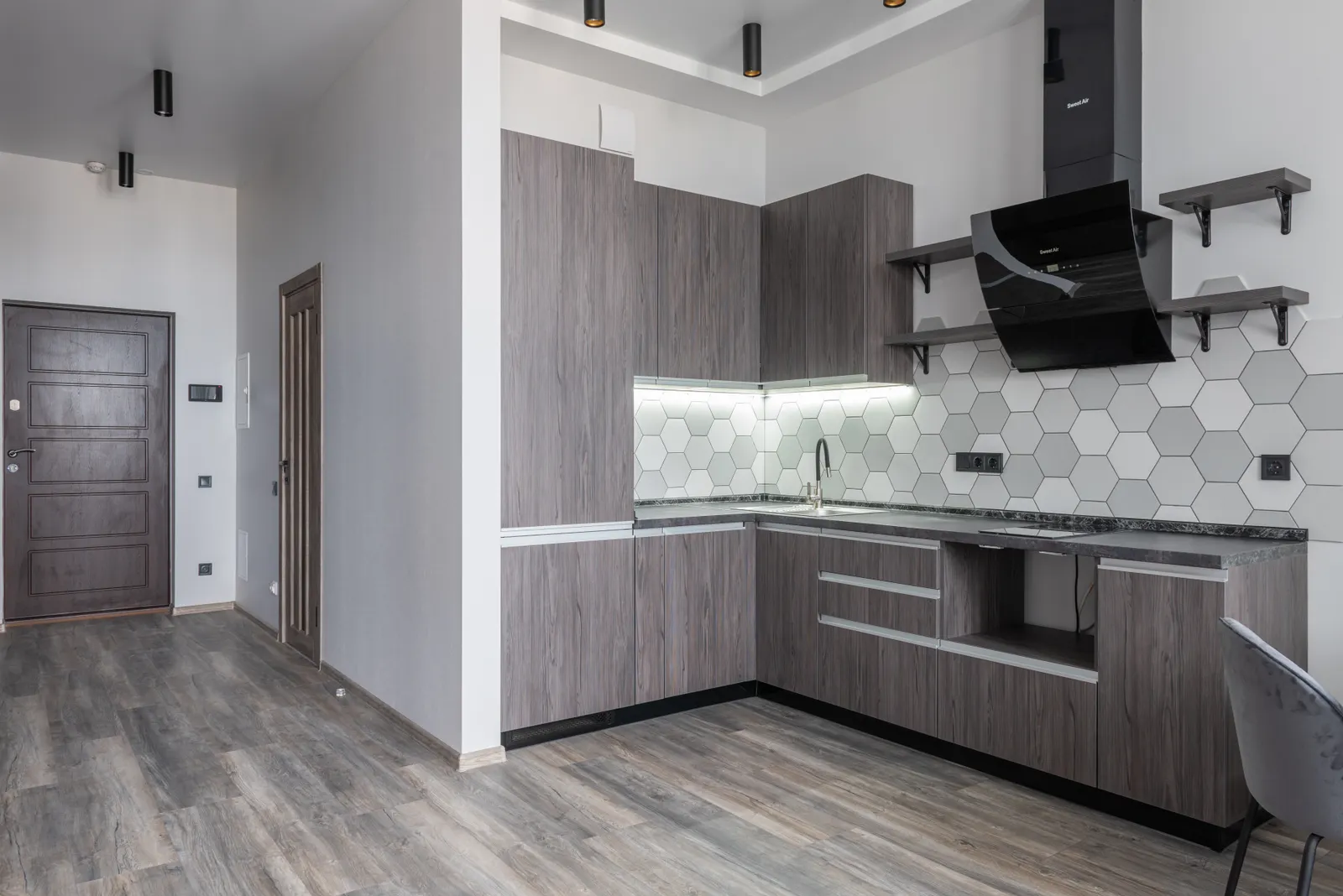
A kitchen corner can look generous on a drawing while holding very little that the family can reach comfortably. The choice between fixed shelves, rotating baskets, pull-out mechanisms and corner drawers should start with the objects you intend to store. For an L-shaped kitchen in Al Ahsa, review the corner together with both adjoining cabinet runs. Buying a mechanism after the cabinet has been made can leave an expensive accessory that does not fit the available opening or suit the user's daily routine.
Give the corner a specific job
Separate frequently used pans from occasional serving dishes, small appliances and spare supplies. Decide which group deserves the corner and which should remain in a straightforward drawer elsewhere. Measure the tallest pot with its lid and the widest platter you expect to put there. Make a short inventory rather than describing the requirement as maximum storage. If the intended objects cannot pass through the opening or sit securely on the proposed tray, the nominal volume of the cabinet is not useful to that household.
Compare the access sequence, not the showroom motion
Ask to see each proposed arrangement with representative items in it. For a rotating basket, follow the item from its stored position to your hands. For a pull-out, observe every movement needed to reach the rear section. For a fixed shelf, test the view and reach to the back. Record whether another item has to be removed first. A mechanism that looks impressive when empty may still be inconvenient for a particular pot collection or for someone who prefers a simpler opening action.
Check the whole cabinet geometry
Have the supplier show the actual internal cabinet dimensions, door opening and hardware clearances on a drawing. Include handles and fronts on the adjoining run, not just the corner box. Blum's SPACE CORNER illustrates one alternative using full-extension corner drawers and coordinated front movement. That product example does not establish that any corner drawer will fit any kitchen. Ask the fabricator to identify the exact mechanism and the cabinet arrangement it requires before approving the joinery for manufacture.
Account for neighbouring work
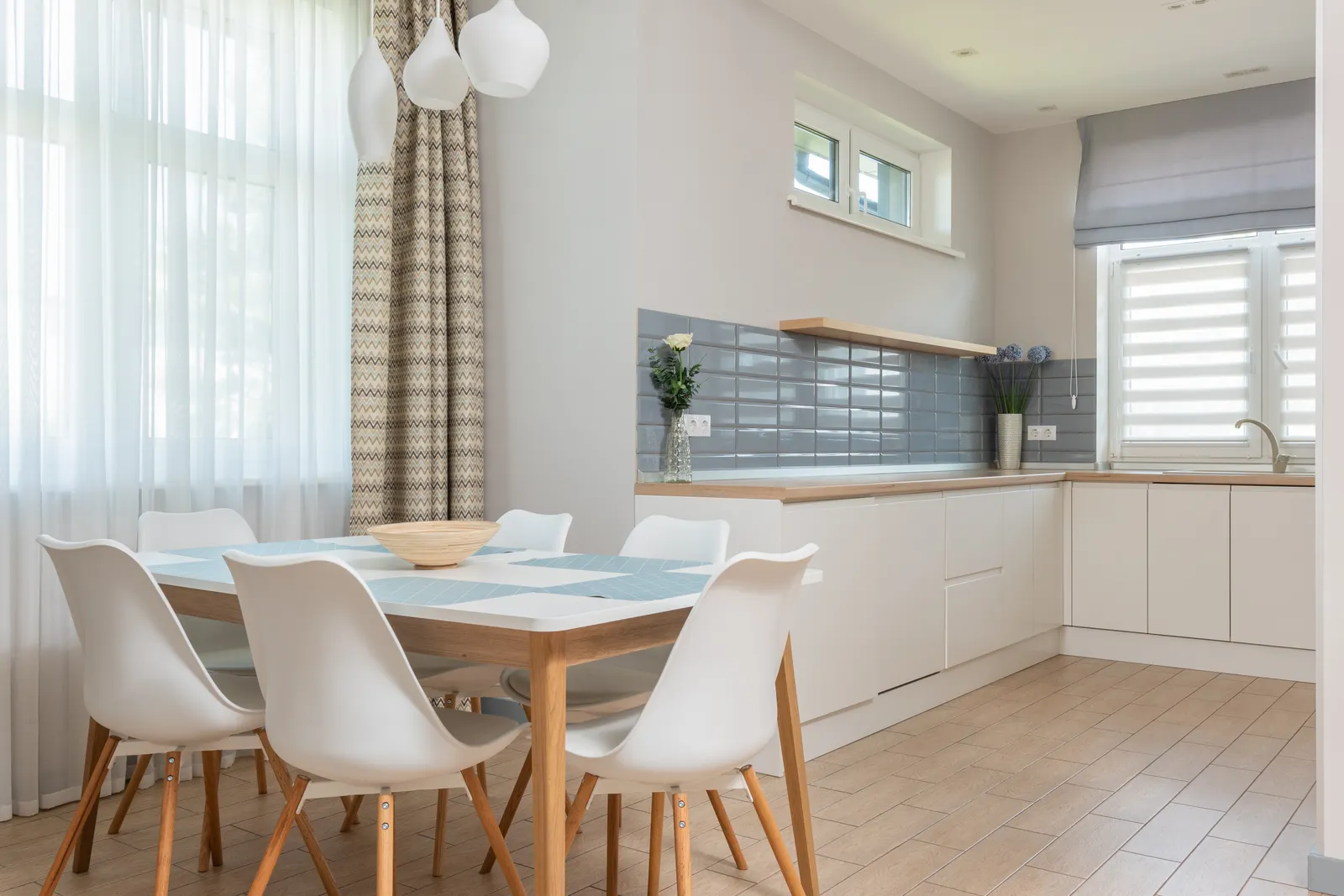
Review the corner while the nearest dishwasher, oven, drawer and cupboard are being used. Identify the combinations likely to happen during meal preparation and cleanup. One person opening a corner unit should not unexpectedly block another person's planned work position. Also check whether pipework or other services occupy part of the cabinet. Keep a marked plan showing those obstructions and the agreed storage envelope. If the corner becomes too complicated, compare a simpler arrangement rather than adding hardware to solve every conflict separately.
Ask about load, care and repair
Request the specified load limit and loading arrangement for the exact system offered. Do not transfer a manufacturer's figure from one product family to another. Ask how trays are cleaned, whether dropped items can be retrieved and which components are replaceable locally. A practical demonstration should include removing or accessing a tray only as the manufacturer permits. Keep the product reference and warranty contact. The goal is a storage unit that the household can care for without treating a hidden mechanism as disposable furniture.
Compare a simpler corner fairly
An ordinary shelf or deliberately limited corner may be a reasonable choice if seldom-used items are stored there and daily cookware has a better home. Compare the complete cabinet arrangement, including what is gained in adjacent drawers, rather than treating every unused centimetre as a design failure. Write down the tradeoff: lower mechanical complexity, different reach, or fewer accessible items. This makes the decision transparent and avoids paying for a mechanism solely because it is presented as an obligatory feature of a modern kitchen.
Use an item-based handover check
Bring the agreed sample objects back at handover and repeat the access sequence. Check that doors, fronts and handles move without the collisions identified during design. Ask the installer to explain normal use and provide the exact hardware reference. Bunyady can coordinate the corner with the wider kitchen storage plan, so the decision supports how cooking actually happens. The acceptance question is specific: can the intended user retrieve the intended items and return them easily with the surrounding kitchen in its normal operating state?
Your practical checklist
- List the exact items intended for the corner.
- Measure lids, handles and wide serving pieces.
- Test the opening sequence with representative objects.
- Review both adjoining cabinet runs.
- Record the exact mechanism and its limits.
- Compare a simple shelf arrangement as well.
Frequently asked questions
Is a rotating basket always better than a fixed shelf?
No. Test the real items, opening and user’s reach. The better arrangement is the one that serves the intended storage task.
Can a corner mechanism be chosen after the cabinets are made?
Only if the supplier confirms compatibility with the actual cabinet and opening. Early selection avoids relying on an assumed fit.
Should every corner be filled with accessories?
No. Compare the accessible storage gained against cost, operation and maintenance. Adjacent drawers may serve daily items more effectively.
Sources and further reading
Sources support the specific facts identified below. Planning examples and checklists are editorial guidance; photographs are illustrative.
- Blum SPACE CORNER — An example of corner drawers with full extension and coordinated front movement; capacities and dimensions belong to the exact system, not all corner storage.