
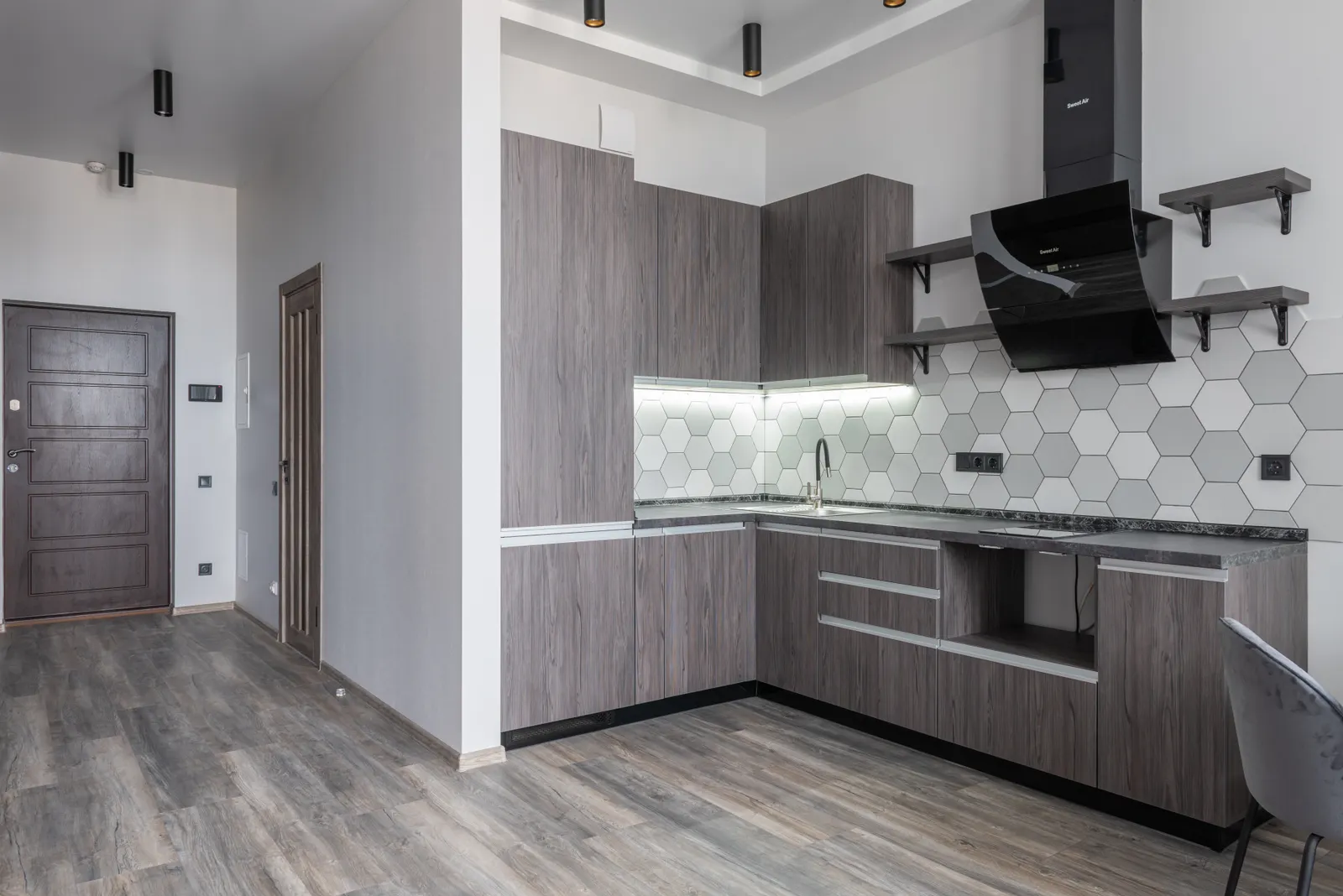
Choose a kitchen opening method by trying it with the people who will use the room, then coordinate it with the actual cabinets and appliances. A handle-free photograph cannot tell you whether the front has a finger recess, a push mechanism or electrical opening assistance. For a kitchen in Al Ahsa, Hofuf or Mubarraz, bring that distinction into the supplier discussion before approving the joinery. The useful outcome is an opening schedule for each cabinet, supported by a working sample, rather than one general promise that the whole kitchen will be handleless.
Name the opening method behind the appearance
Start with three separate options: a visible handle that you grip, a recessed edge or channel that you pull, and a front activated by pushing. Ask the supplier to show the proposed section or hardware reference for each. Two kitchens can look similar from across the room but require different hand movements. Also distinguish opening assistance from the closing action. Blum describes TIP-ON as mechanical push opening, while its TIP-ON BLUMOTION drawer system combines mechanical opening with soft closing. These are specific product examples, not proof that every push mechanism includes a soft-close function.
Test the grip with the actual users
Arrange a sample trial at a representative installed height. Ask each regular kitchen user to open a narrow door, a wide drawer and a frequently used cupboard without coaching them through the motion. Record where the hand goes, whether the grip feels comfortable and whether the action is easy to repeat. An empty sample drawer is only the first demonstration; ask the supplier to demonstrate the intended use with a suitable representative load. If a household member finds a particular movement difficult, change the proposal for that cabinet instead of assuming everyone will adapt after installation.
Use a short everyday task instead of a showroom gesture
Try a complete sequence: approach the cabinet, open it, retrieve a plate, set the plate down and close the front. Repeat at the drawer used for cooking tools and the cupboard used during cleaning. Keep the demonstration controlled and use clean, dry hands rather than deliberately dirtying a showroom. Discuss what happens when a hand is occupied, but do not turn a promotional claim into a promise about every user or situation. Write down which options worked for the household. This small exercise produces a reason for the specification that a photograph alone cannot provide.
Draw the handle and the neighbouring fronts
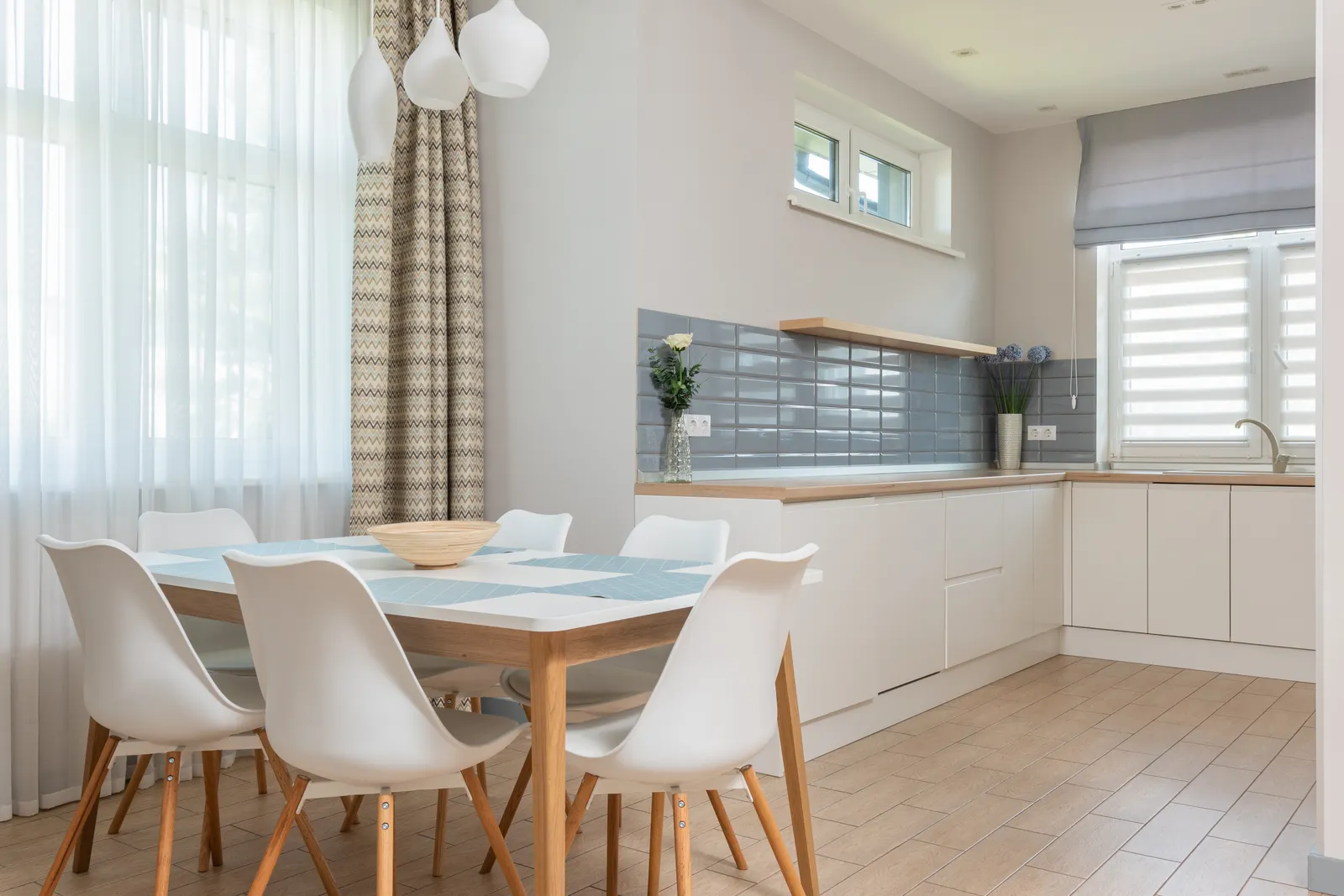
Ask the kitchen supplier to show the handle projection or gripping channel on the cabinet drawing, not only on a finish sample. Review the end of a run beside a wall, adjacent corner doors and drawers opposite appliance doors. Demonstrate the opening sequence where two fronts meet. The purpose is to discover a collision or an awkward grip before fabrication. Do not invent a universal clearance from an online image: have the supplier use the selected handle, hinge, drawer and appliance information. Mark any filler, end panel or altered opening direction clearly on the approved layout.
Treat appliance fronts as a separate coordination item
A matching finish does not mean an appliance door works like the cabinet beside it. Record the exact refrigerator and dishwasher models and have their required opening arrangements checked with the proposed joinery. Ask who approves the panel, handle and access details for each appliance. If the plan includes electrically assisted furniture, confirm the selected system and its service requirements; Blum distinguishes electrical SERVO-DRIVE from its mechanical opening technologies. That distinction does not establish compatibility with an arbitrary appliance. Keep appliance-specific decisions in the schedule instead of extending a cabinet demonstration to every front in the room.
Compare cleaning on the specified surface
Request a physical sample of the proposed handle or recess together with the actual front finish. Look at where fingers touch, whether the recess can be reached with the permitted cleaning method and whether a neighbouring worktop makes access awkward. Obtain written care instructions rather than relying on labels such as maintenance-free or fingerprint-proof. There is no need to claim that all handles are easier to clean or all plain fronts are worse. The relevant comparison is between the products offered, their care restrictions and the routine the household is willing to follow.
Price a cabinet-by-cabinet opening schedule
Give every cabinet an identifier and record its opening method, hardware reference, finish and any agreed exception. Request quotations against the same schedule, including installation, adjustment and the described aftercare. This makes a lower initial price easier to interpret without inventing a market price per drawer. A mixed arrangement can be considered: visible handles on selected high-use fronts and another method elsewhere, if the design and trial support it. Confirm what is included before ordering, because an attractive label on a quotation does not identify the parts that will actually be supplied.
Accept the installation against the approved trial
At handover, work through the numbered schedule with the installer. Operate each front normally, compare the motion with the agreed sample and check the neighbouring openings already identified on the drawing. Record any sticking, collision, uneven front alignment or missing part as a specific item for correction. Obtain the hardware references, care documents and contact route for later adjustment. Ask the installer to demonstrate any intended maintenance access; avoid experimenting with concealed mechanisms yourself. Bunyady can coordinate the opening schedule with the wider kitchen layout so the final appearance and everyday operation are reviewed together.
Your practical checklist
- Label each cabinet and its opening method.
- Try the actual grip at a representative height.
- Separate push opening from soft closing.
- Check adjacent doors and handle projections on the drawing.
- Coordinate refrigerator and dishwasher fronts by exact model.
- Keep the approved sample, hardware references and care instructions.
Frequently asked questions
Does handleless always mean push-to-open?
No. A front may use a recessed gripping edge or channel instead. Ask to see the actual section and operating sample.
Does a push-to-open drawer necessarily close softly?
No. Opening and closing functions must be identified for the exact hardware. A specified system can combine them, but the appearance alone does not establish that feature.
Can one kitchen use more than one opening method?
That can be considered cabinet by cabinet. Agree the exceptions, test the operation and review the resulting appearance before fabrication.
Sources and further reading
Sources support the specific facts identified below. Planning examples and checklists are editorial guidance; photographs are illustrative.
- Blum: TIP-ON — Manufacturer example of mechanical push opening; no claim about local availability or every cabinet system.
- Blum: TIP-ON BLUMOTION — Product-specific example combining mechanical drawer opening and soft closing.
- Blum: overview of motion technologies — Distinguishes electrical and mechanical opening technologies; does not establish compatibility with an unspecified appliance.