
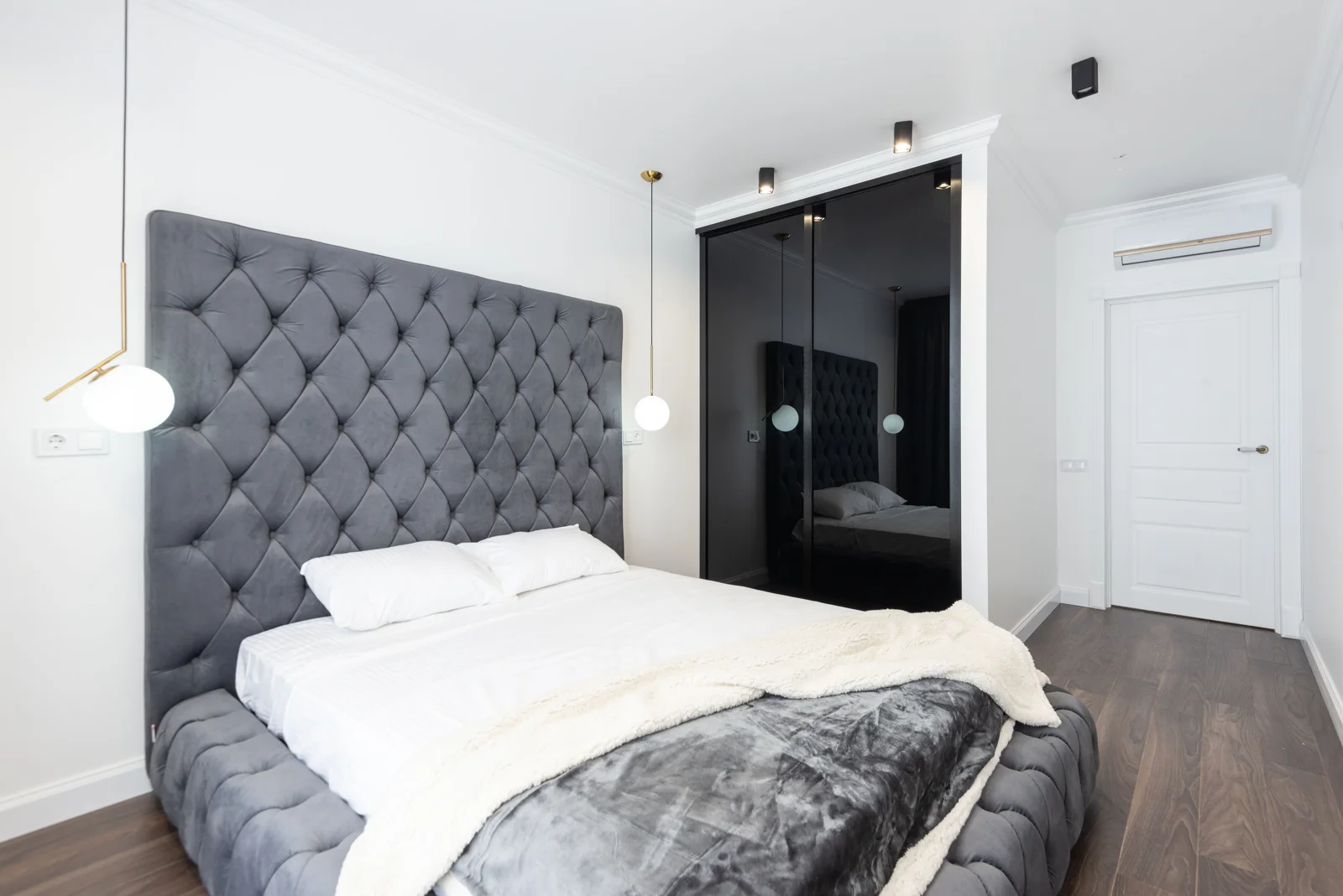
A headboard is both a surface you live against and a large part of the bedroom composition. Choosing fabric or wood from a photograph leaves several decisions unresolved: how it will be cleaned, whether its cover can be replaced, how high it appears above the mattress and where the bedside controls sit. For a bedroom project in Al Ahsa, use the actual bed arrangement and household routine to make the comparison. Neither material description alone tells you how a finished product will behave.
Begin with how you use the bed
Describe an ordinary evening rather than a preferred style. Do you sit against the headboard to read, keep cushions behind your shoulders or use the bed mainly for sleeping? Try the proposed support with a mattress and pillows comparable to your own. A padded appearance does not establish comfort for every person, and a timber panel can still be paired with separate cushions. Record which contact surfaces matter and which areas are mostly visual before judging a sample in the showroom.
Separate upholstery from its care method
Ask whether the covering is fixed, removable or replaceable only by an upholsterer. Those are different ownership arrangements. IKEA's SAGESUND is one example with a removable, machine-washable cover; that feature belongs to the specified product and should not be transferred to upholstered beds generally. For the exact fabric offered, obtain written cleaning instructions and any restrictions on detergents or equipment. If a replacement cover is promised, confirm the product reference and availability rather than relying on a verbal assurance about future supply.
Examine a wooden finish as a finished assembly
The label wood can describe several constructions and surface treatments. Request the actual substrate and finish specification, an edge sample and the manufacturer's care instructions. Examine the joints and the surfaces close to pillows, bedside furniture and cleaning equipment. Avoid deciding from a generic claim that one material is easier to maintain. The useful comparison is between two specified products, their permitted care methods and the repair options the supplier can demonstrate for the finish being sold.

Draw the bed with its real mattress height
Show the bed base, mattress and headboard together in elevation. Include the height of the bedside tables and the portion of the headboard that remains visible above pillows. For a custom wall panel, decide whether it belongs visually to the bed or spans the wider wall. Ask how the composition changes if the mattress is replaced later. A headboard ordered from overall dimensions without this drawing can hide useful upholstery or leave bedside controls in an awkward position after installation.
Coordinate lights and sockets before manufacture
Mark where each sleeper reaches for a light, phone and everyday item. Place the actual bedside furniture in the review, including its drawers and any charging cables. Have the electrical designer coordinate the approved controls and outlets before fixed panels are fabricated. Do not cover a service point merely to keep the elevation symmetrical. If access is needed behind a panel, show how it will be retained. This is a coordination decision, not an instruction to move wiring without qualified assessment.
Compare the replacement boundary
Ask what can be changed independently: a cover, upholstered insert, complete headboard or entire bed frame. Establish how the item is attached and who is responsible for wall fixing where required. A custom design may offer a useful replaceable section, but only if the detail and supplier scope actually provide it. Put the agreed material, colour sample, fixing responsibility and care documents in the order. This prevents a future repair from depending on an undocumented assumption about how the original piece was built.
Approve a sample and a practical handover
Review the sample in the intended room lighting alongside the bedding and nearby joinery. At handover, check the approved layout, visible finish, accessible controls and delivered care instructions. Ask the supplier to demonstrate removal only for parts designed to be removed. Bunyady can coordinate this decision with the wider bedroom layout so the chosen headboard supports daily use and the planned appearance. Keep the final sample reference and specification with the project records, especially when the headboard is custom made.
Your practical checklist
- Test sitting support with representative pillows.
- Obtain the exact fabric or surface care instructions.
- Confirm whether covers can be removed and replaced.
- Draw the mattress and bedside furniture together.
- Keep controls and service points accessible.
- Record material samples and fixing responsibilities.
Frequently asked questions
Is every upholstered headboard washable?
No. Some have removable washable covers and others do not. Follow the care instructions for the exact product and fabric.
Is wood always easier to maintain?
That depends on the specified finish, construction and cleaning restrictions. Compare real product instructions and repair options.
When should a custom headboard be ordered?
After the bed, mattress height, bedside furniture and electrical layout have been coordinated and the final material sample approved.
Sources and further reading
Sources support the specific facts identified below. Planning examples and checklists are editorial guidance; photographs are illustrative.
- IKEA SAGESUND upholstered bed frame — A product-specific example of a removable, machine-washable upholstered cover. This care feature must not be assumed for other headboards.