
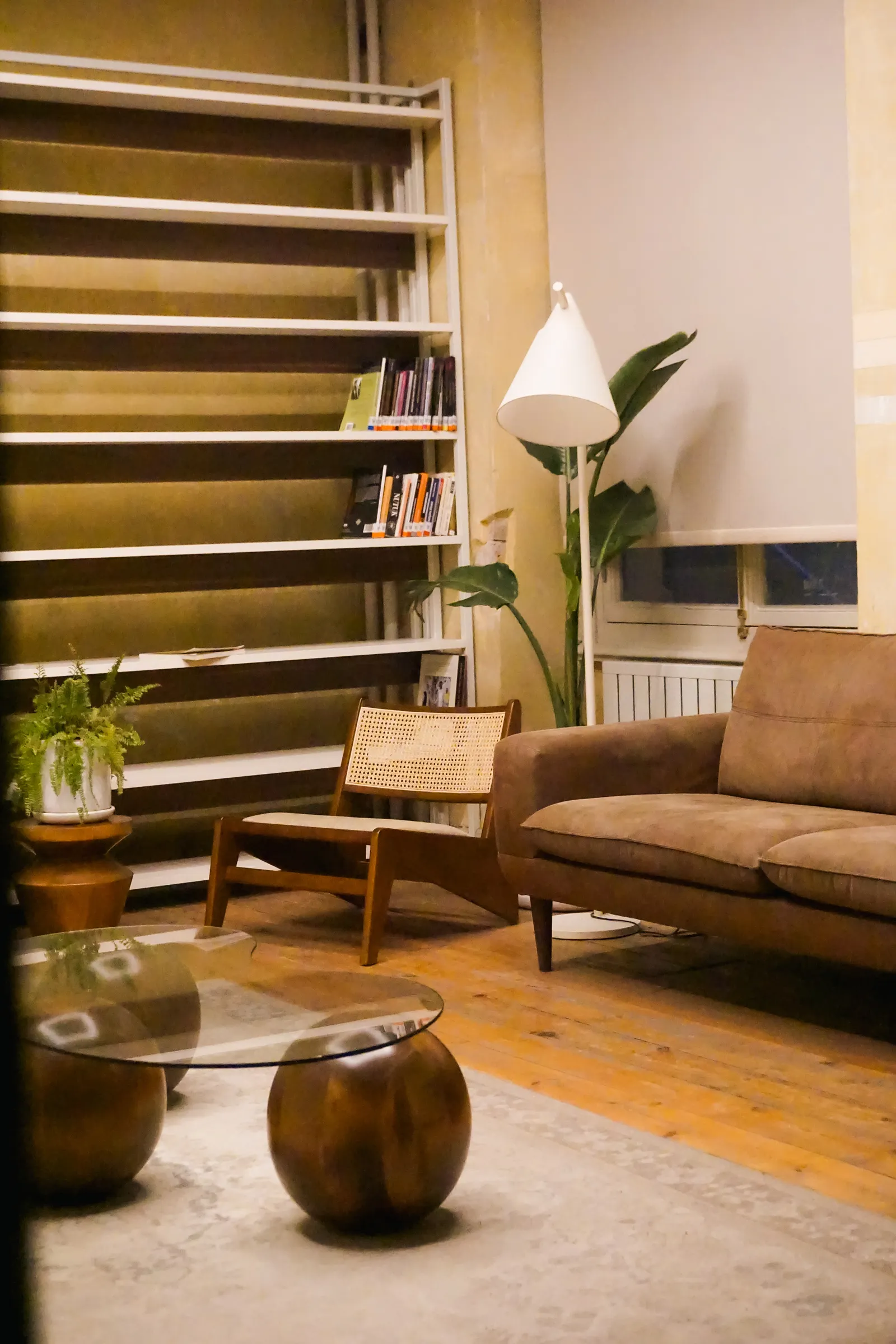
White paint should be chosen with the stone and wood that surround it. A shade that looks clean on a card may feel different beside a warm timber door, a patterned marble floor or an existing white cabinet. The task is not to find a universally perfect white, but to decide which relationship suits your home. Compare a small set of physical samples with the actual materials and identify whether you want continuity, gentle contrast or a more distinct separation.
Identify the material that leads
Look at the largest retained surfaces and decide which one should guide the comparison. A broad marble floor may carry more visual weight than a small timber table; a wall of cabinetry may matter more than an occasional stone accent. Bring actual samples where possible and inspect the installed materials when samples are unrepresentative. Do not choose the paint beside only the lightest patch of a patterned stone. Review the overall pattern and the portions that will be seen most often from normal positions.
Compare whites side by side, then separately
Select a few distinct candidates and label their exact references. Jazeera Paints’ official catalogue library includes a white and off-white collection, offering a practical starting set without proving suitability for your room. Compare samples together to notice differences, then view each beside the stone and wood on its own. The favourite among several chips may not be the favourite in the actual composition. Remove rejected options from the display so the final decision is not continually influenced by colours you no longer intend to use.
Include existing whites in the test
Place references for doors, ceilings, trims, kitchen fronts or sanitaryware that will remain white nearby. Decide whether the new wall should closely relate to them or deliberately differ. An almost-match can be less satisfying than a clear contrast if the household expected continuity. Do not assume the word white identifies one colour across different materials and finishes. Ask the designer to review adjoining surfaces together, especially where the new wall directly touches an existing painted frame or built-in cabinet.
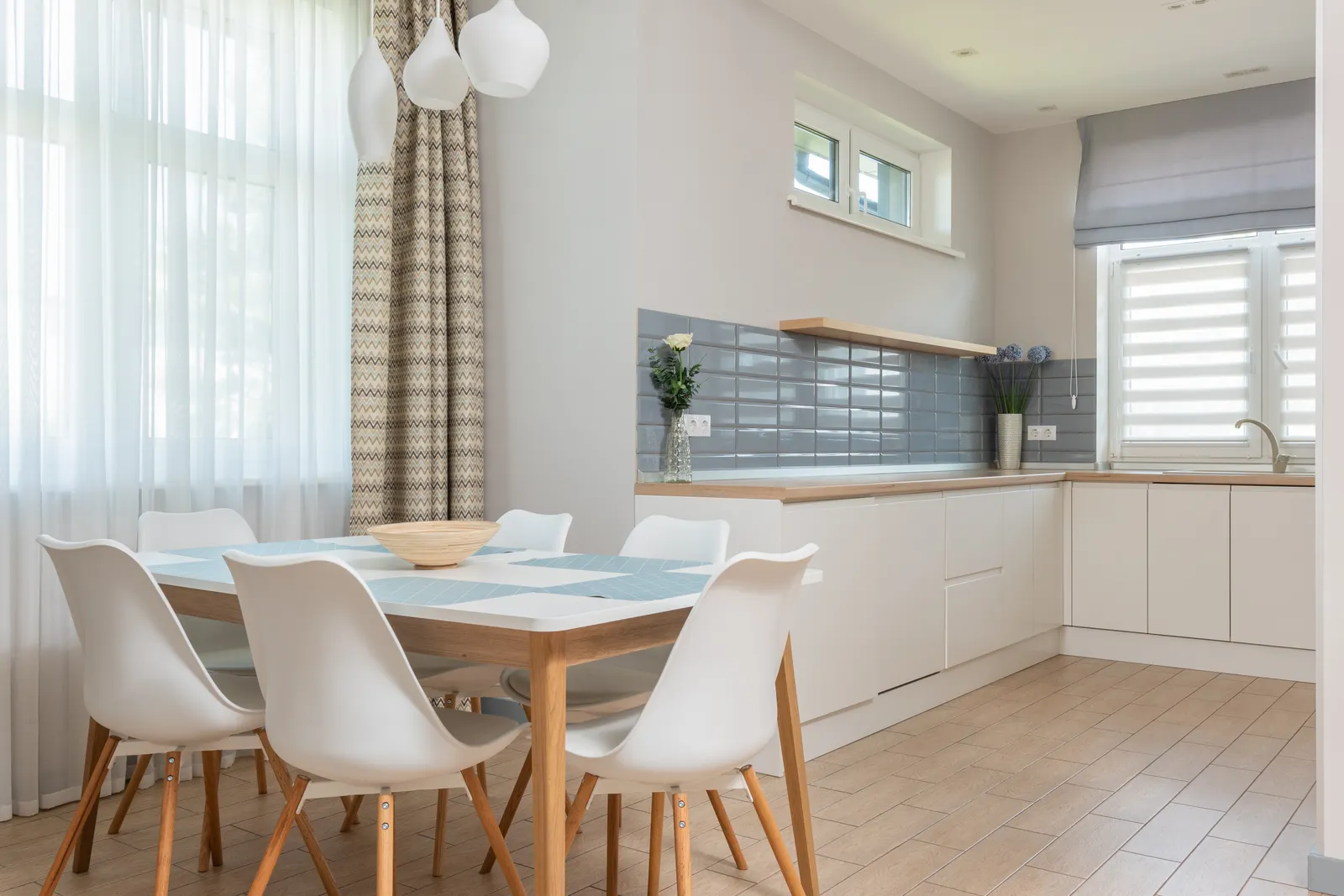
Review light without chasing every variation
Observe the samples during normal daytime and evening use, beside the actual floor and timber. Note which relationship remains acceptable across those conditions. You are not seeking a white that looks absolutely identical in every light, but one you enjoy in the room’s ordinary range of appearances. If a sample works only in a single unusual moment, consider another candidate. Avoid changing lighting and paint simultaneously during the comparison unless the lighting change is already part of the approved project.
Check the intended finish and scale
Request an appropriate sample in the selected product and finish, and view it across a meaningful area rather than relying solely on a small printed chip. Ask the painter how to prepare a representative sample for the existing surface. Review the result near a corner and a major retained material, where their relationship is easy to judge. A successful white decision includes its finish and location. Keep those details attached to the colour reference so the approved appearance is not reduced to a name alone.
Make the relationship the final criterion
In a hypothetical hallway with pronounced stone veining and timber doors, a quiet white may be chosen to let those materials lead. Another room may use a more noticeable difference between wall and trim as part of the design. Neither result proves that one white is universally superior. Approve the sample that supports the intended balance, then record manufacturer, code, product and finish. Save the sample with photographs of the materials so future repairs begin from the same documented relationship.
Your practical checklist
- Choose the largest retained material as a reference.
- Compare a few labelled whites with real samples.
- Include existing white doors, cabinets and trim.
- Observe ordinary daytime and evening conditions.
- Approve product, finish and colour as one decision.
Frequently asked questions
Should white always match the lightest marble vein?
No. Judge the overall stone pattern and room composition. Matching one small detail may not produce the relationship you want across the whole floor.
Must the wall and door be the same white?
Only if that is the intended effect and the products are appropriately specified. A deliberate difference can also be part of a coherent design.
Can I choose from the catalogue alone?
Use it to shortlist, then approve a physical sample beside the actual stone, wood and existing whites under the room’s usual lighting.
Sources and further reading
Sources support the specific facts identified below. Planning examples and checklists are editorial guidance; photographs are illustrative.
- Jazeera Paints Saudi Arabia — Official catalogues — Short reference to the official White & Off-White collection; no specific colour recommendation or invented code.