
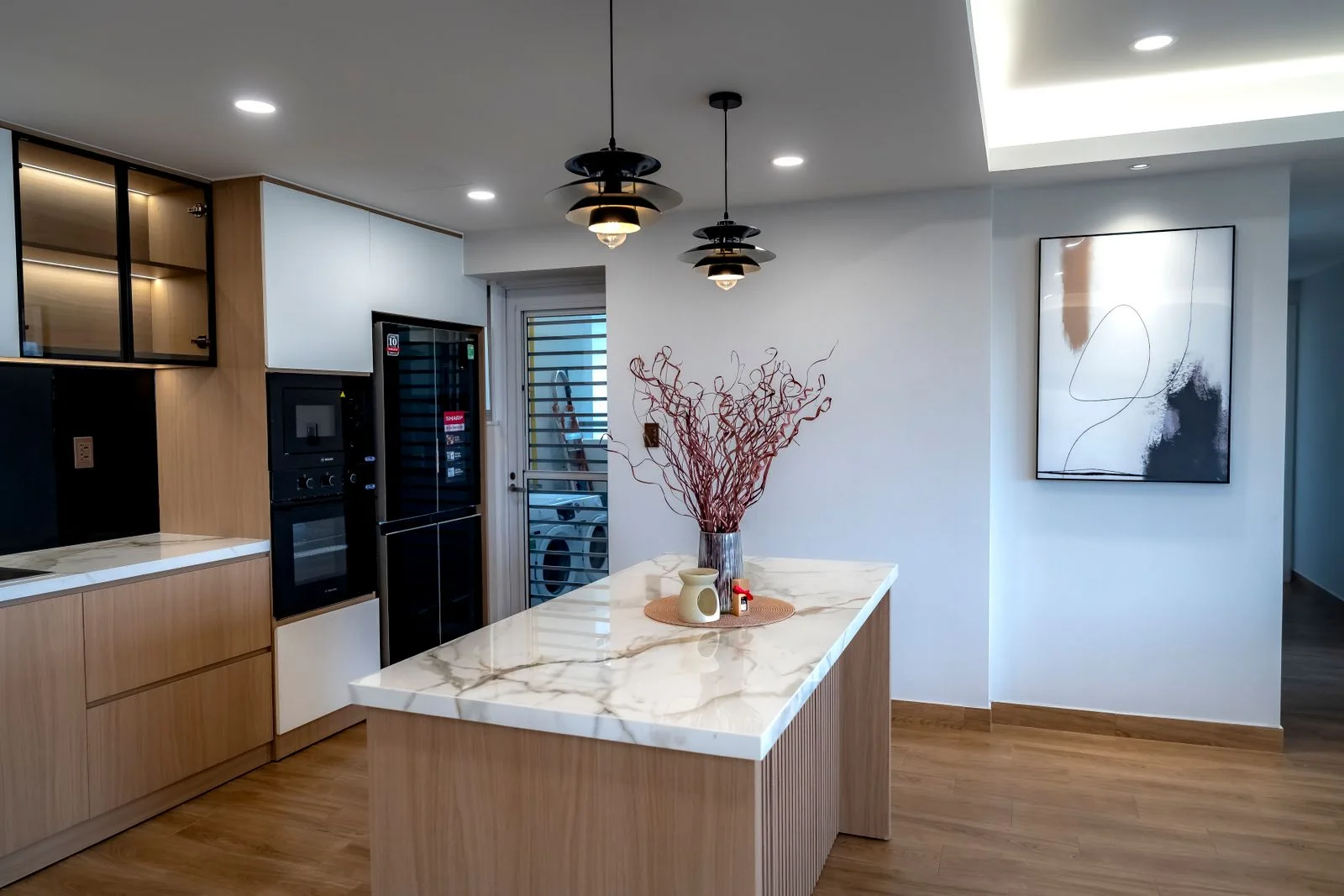
When two kitchen lights look similar in a product listing, the wattage alone will not tell you which one is brighter or whether its colour will suit your room. A more useful comparison starts with the information the manufacturer publishes and the job you need the light to do. This guide explains the main label terms and the questions to ask before a product is added to a kitchen schedule. It does not prescribe one colour or brightness for every home.
Compare light output in lumens, not watts alone
Watts describe electrical power, while lumens describe the amount of light emitted. The U.S. Department of Energy's consumer guide explains why shoppers comparing modern LED products should look at lumens rather than assuming that two products with the same wattage produce the same light. The fixture's optics and distribution also affect how light reaches a surface, so a lumen figure is only one part of the decision.
For a fair comparison, write down each candidate's stated lumen output and whether the figure refers to the lamp or the complete luminaire. Check that both products are being described on the same basis. Do not infer a room's required brightness from a single bulb label; the layout, mounting position, fixture distribution, finishes and task all matter.
Read colour temperature as appearance, not brightness
Correlated colour temperature (CCT), usually shown in kelvin, describes whether the light appears warmer or cooler. It does not tell you how much light the product emits. The Department of Energy notes that higher kelvin values look cooler or bluer and lower values look warmer. Compare samples with the actual cabinet, counter and wall finishes, especially if the kitchen opens into another room.
A CCT number helps you shortlist products, but it cannot show exactly how your own materials will look. Ask to see the actual product or a reliable sample under conditions close to the room's intended use. If you are coordinating several fittings, record the chosen product references and colour appearance so a later substitute does not quietly change the result.
Check colour rendering for the things you see every day
The colour rendering index (CRI) is a way to compare how a light source renders object colours against a reference. The U.S. Department of Energy gives general guidance of CRI 80 or higher for interior lighting, while also explaining that CRI is not a perfect measure and that other metrics can provide more detail. Treat that as general guidance, not a complete kitchen specification or a Saudi regulatory requirement.
If accurate colour appearance is important for your chosen finishes or daily tasks, compare the stated CRI and, where the manufacturer provides it, additional colour data. A high number does not establish that a product has the right output, distribution or comfort for the room. Look at colour quality alongside the rest of the specification.
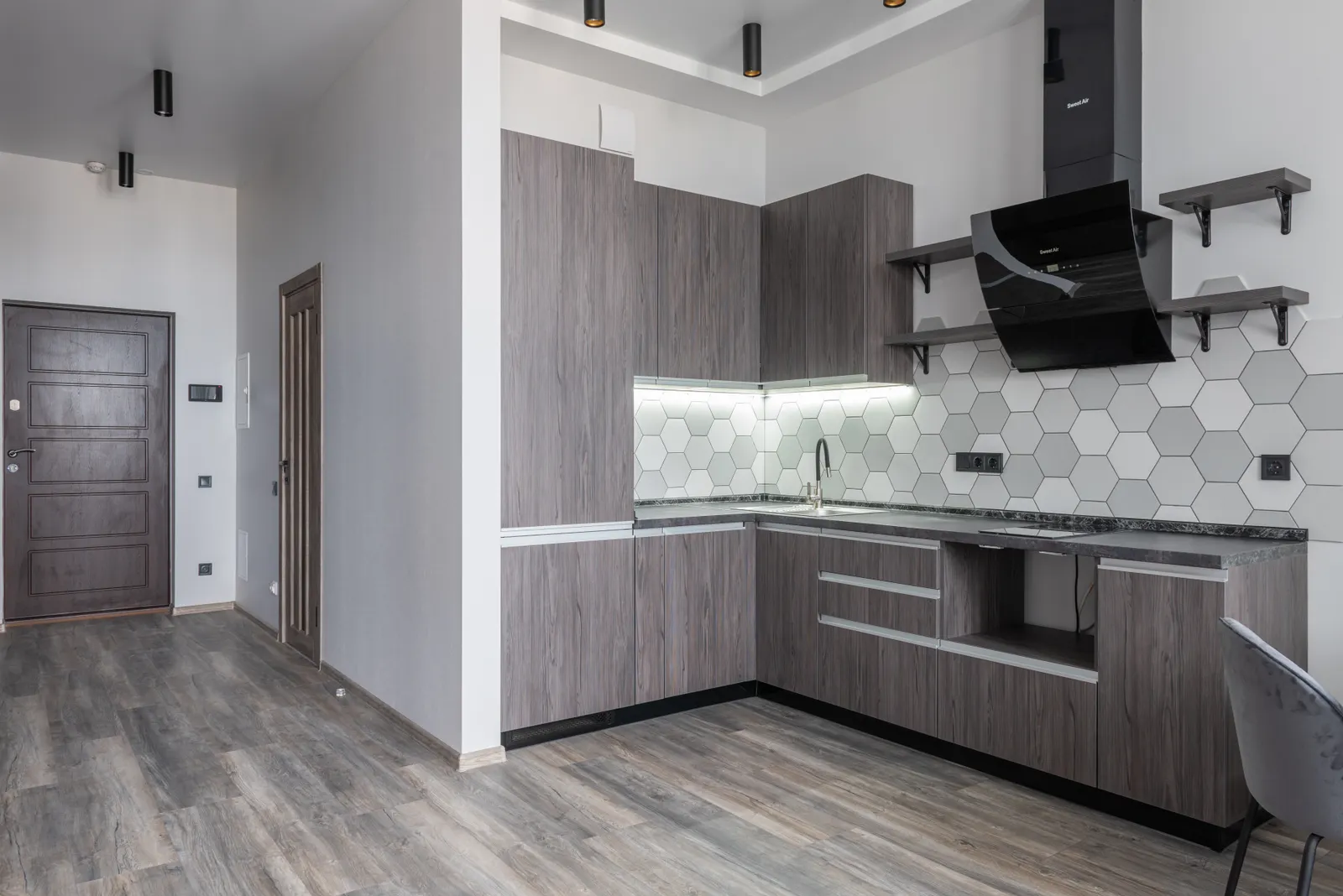
Check what the stated output figure describes
Product listings may describe a replaceable lamp, a complete luminaire or only one component. Read the manufacturer's data sheet and confirm which item the lumen and colour figures describe. If you are comparing a built-in fixture with a separate lamp, do not assume their numbers refer to the same part of the system.
Record the exact model reference, version and listed output with the selection. If a supplier offers a visually similar alternative, compare that product's own data rather than carrying over figures from the first model. This guide compares product information; for a lighting calculation, colour choice or worktop-shadow review, use the related guides.
Make a side-by-side product comparison
Put two or three candidate products in one table. Record the manufacturer and exact model, lumen output and what it measures, wattage, CCT, CRI, stated distribution, dimensions and relevant warranty or replacement information. Add a column for the intended use and mark any unknowns for the supplier or designer to resolve.
Use the actual product data sheet, not a retailer headline or a photo of a similar fitting. Product ranges and specifications can change, and a visually similar replacement may have different performance. Keep the chosen data sheet with the approved lighting schedule so the purchaser, installer and designer are referring to the same product.
Keep the limits of a label in view
A specification sheet helps you compare products; it does not prove that a fixture will be comfortable in a particular position or that the whole room is adequately lit. Those questions depend on the room design and may need a coordinated lighting plan or on-site review. Confirm installation requirements and local electrical compliance with the qualified professional responsible for the project.
If the main uncertainty is a calculation or simulation report, ask for the assumptions, product references and comparison behind it. If it is the appearance of warm or neutral light, compare real samples with your finishes. If the concern is a shadow over the kitchen worktop, review the lighting from the actual working position. Each question needs its own check.
Your practical checklist
- Compare lumen output on the same basis; watts describe electrical power, not light output.
- Use CCT for warm-versus-cool appearance and CRI as one indicator of colour rendering, not as a complete quality score.
- Confirm whether each figure describes the lamp or the complete luminaire, then compare exact model references.
- Keep the exact model reference and data sheet with the approved kitchen lighting schedule.
Frequently asked questions
Are more watts always brighter for an LED kitchen light?
No. Watts measure electrical power. Compare the stated lumens for light output, then check how the complete fixture distributes light for its intended use.
Does a higher kelvin number mean a brighter light?
No. Kelvin is used to describe correlated colour temperature, or warm-versus-cool appearance. Compare lumen output separately when considering light quantity.
Does a high CRI guarantee that an LED is the right choice for my kitchen?
No. CRI is one indicator of colour rendering, not a complete measure of brightness, distribution, comfort or fit for a particular room. Compare it alongside the actual product data and the intended use.
Sources and further reading
Sources support the specific facts identified below. Planning examples and checklists are editorial guidance; photographs are illustrative.
- U.S. Department of Energy — LED Basics — Supports the limited explanation of CCT, CRI and general interior-lighting CRI guidance; not a kitchen design rule or Saudi regulation.
- U.S. Department of Energy — Consumer Guide to Energy-Efficient Lighting — Supports the distinction between lumens as light output and watts as electrical power, and the general kelvin appearance description.