

Economic, mid-range and luxury are marketing labels unless a quotation explains what they include. Two suppliers can use the same word for different products and different levels of detail. Replace the label with a specification you can inspect, compare and maintain. A well-chosen economical scheme can be coherent and practical; a costly scheme can still disappoint if its details do not suit the household.
Define performance before prestige
Begin with where the material will be used and what it must tolerate in that setting. Ask for the actual product’s intended application, care requirements and relevant documentation. A material suitable for a decorative wall is not automatically suitable for a wet floor or heavily used surface. Let the responsible specialist assess technical suitability. Once that is established, compare appearance and cost. A more expensive label should not be used as a shortcut around product-specific questions.
Describe visible finish and construction separately
For a cabinet, separate the substrate, visible finish, edging, hardware and internal arrangement. For a door, distinguish the complete assembly from the surface appearance. Ask for a sample and a written specification that match each other. A beautiful front can conceal an unspecified interior, while a plain-looking product may meet your needs well. This breakdown helps you decide where an upgrade is valuable and where it is mainly a matter of visual preference.
Compare detail intensity
Custom junctions, unusual sizes, concealed elements and repeated changes can add design and production work. Ask which details create the intended effect and which can be simplified without losing the room’s character. A hypothetical living room may achieve a calm, refined appearance through proportion and a limited palette rather than several bespoke wall treatments. This is an editorial design option, not a claim that one style is always cheaper. Price complete alternatives to understand the actual difference.
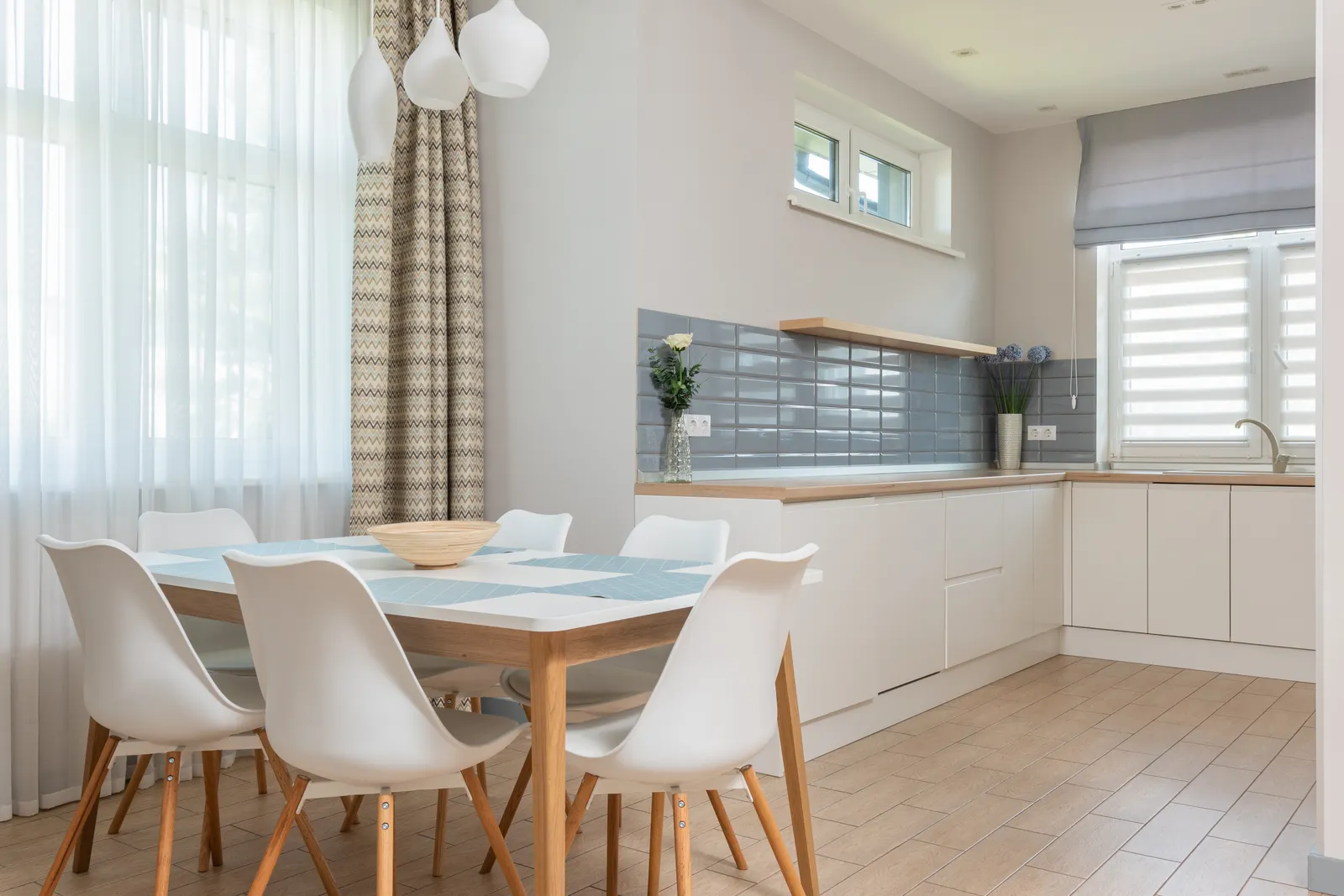
Use samples to test the promised level
Review representative samples together under the room’s lighting. Look at edge treatment, texture, colour relationships and how parts meet. Ask whether the sample reflects the exact product and finish in the quotation. Manufacturer catalogues, such as Saudi Ceramics’ product catalogues, help identify product families; they do not replace checking the chosen item. Record the approved reference and any natural variation you accept. Avoid signing off a general mood board as if it were a complete material specification.
Include care and replacement in the comparison
Ask how each finish is cleaned, which products are unsuitable and whether damaged components can be replaced individually. Obtain the manufacturer’s instructions for the exact product rather than using a generic care routine. Consider who will maintain the home and how much effort they are willing to spend. A demanding finish may be acceptable in a small feature area but inconvenient across the whole house. The decision is about fit with your household, not the prestige of the material name.
Build your own specification levels
Create a base option that meets the functional brief, then list specific upgrades with their additional cost and benefit. For example, an upgrade might change a finish, add a storage fitting or introduce a custom dimension. Keep safety and essential suitability outside cosmetic trade-offs. Ask suppliers to identify every difference rather than quoting only three tier names. You can then choose a mixed specification intelligently, spending more where it matters and simplifying areas where the benefit is limited.
Your practical checklist
- Replace tier names with product and assembly descriptions.
- Confirm suitability for the intended location.
- Compare samples against written references.
- Ask about care and component replacement.
- Price upgrades individually above a complete base.
Frequently asked questions
Does luxury mean better durability?
Not automatically. Durability depends on the actual product, application, installation and care. Ask for relevant evidence rather than treating the marketing tier as a performance rating.
Can I mix economical and higher-cost products?
Yes, if they are compatible in use and appearance. Compare samples together and preserve necessary technical suitability, while concentrating discretionary spending on the details you value.
What should a specification include?
Enough to identify the product, finish, configuration, quantity and work included. For technical items, the responsible specialist should define the necessary performance and documentation.
Sources and further reading
Sources support the specific facts identified below. Planning examples and checklists are editorial guidance; photographs are illustrative.
- Saudi Ceramics — Product catalogues — Manufacturer product catalogues; check the exact selected item.