
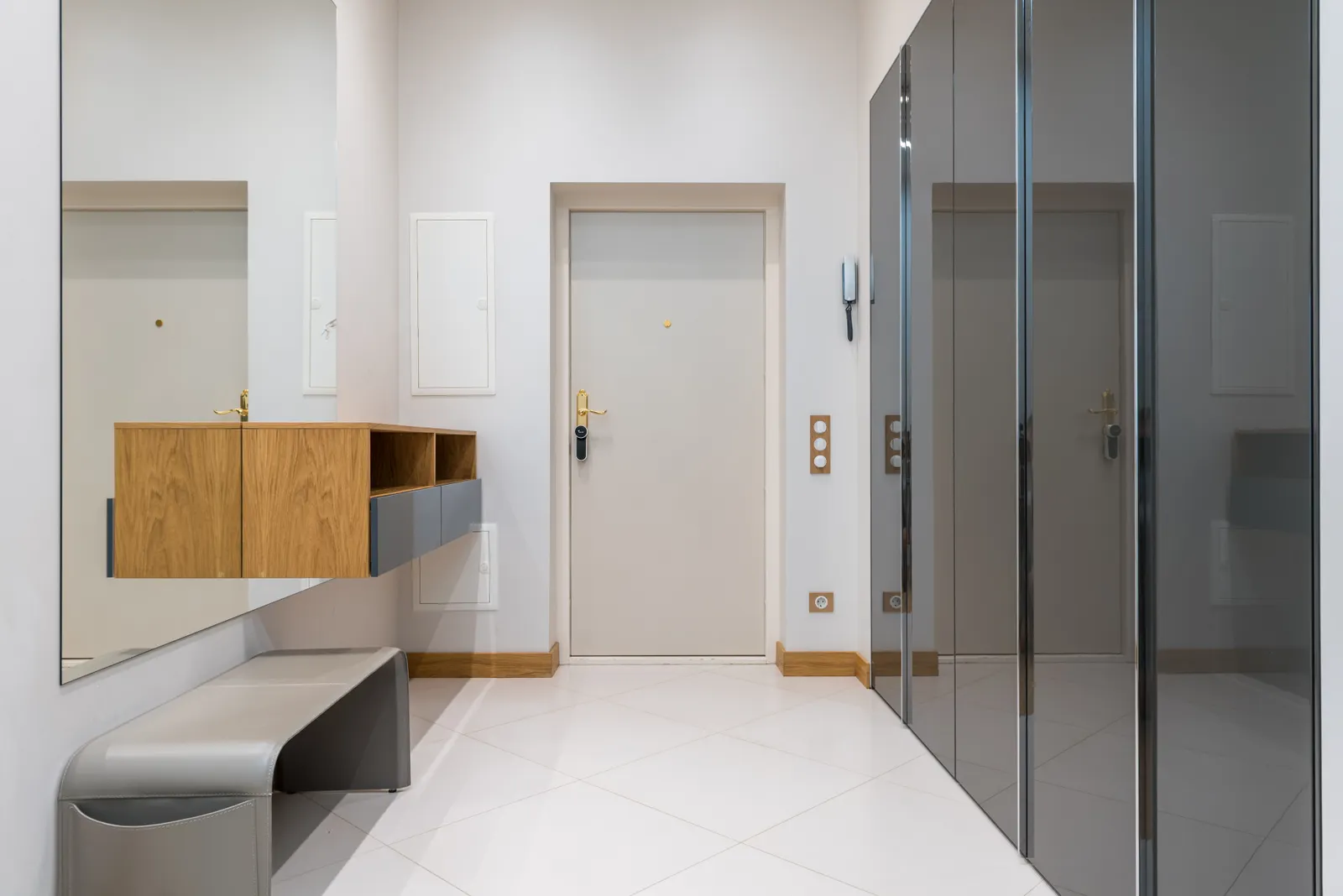
Two interior doors can share a colour and panel pattern while feeling very different in use. The core, frame, hardware and installation all belong in the selection discussion. When choosing doors for an Al Ahsa home, begin with what each room needs instead of specifying one attractive image for every opening. A clear door schedule makes it easier to compare proposals and avoids discovering at handover that the quoted door leaf was only one part of the required installation.
Separate solid core from solid timber
JELD-WEN describes its hollow-core construction as a frame with a paper honeycomb interior between face skins, and notes the greater weight of solid-core alternatives. Solid core should not automatically be read as solid natural timber: ask the supplier to identify the actual construction. Request a section sample or product sheet rather than relying on a salesperson's broad description. Keep finish, core and frame as separate entries so a change in one does not pass unnoticed under the same colour name.
Assign a purpose to each opening
Make a list of bedrooms, bathrooms, storage rooms and work areas. For each, describe privacy, frequency of use and the people opening it. A quiet work room may have a different priority from a rarely opened cupboard. The manufacturer discusses improved sound control with solid-core products, but the core name alone is not a measured acoustic rating. If a particular performance matters, ask for evidence covering the proposed doorset and its installation rather than assuming that a heavier leaf guarantees the desired result.
Review the frame and existing opening
In a renovation, record the opening and inspect the existing frame before ordering a new leaf. Ask the installer what will be retained, repaired or replaced, and how this affects adjacent paint, flooring and skirting. A door that looks like a simple replacement can involve several trades if the frame changes. Keep those interfaces visible in the quotation. Do not choose a finished size from an old photograph or a rough room plan when the actual opening can be measured on site.
Match hardware to the selected product
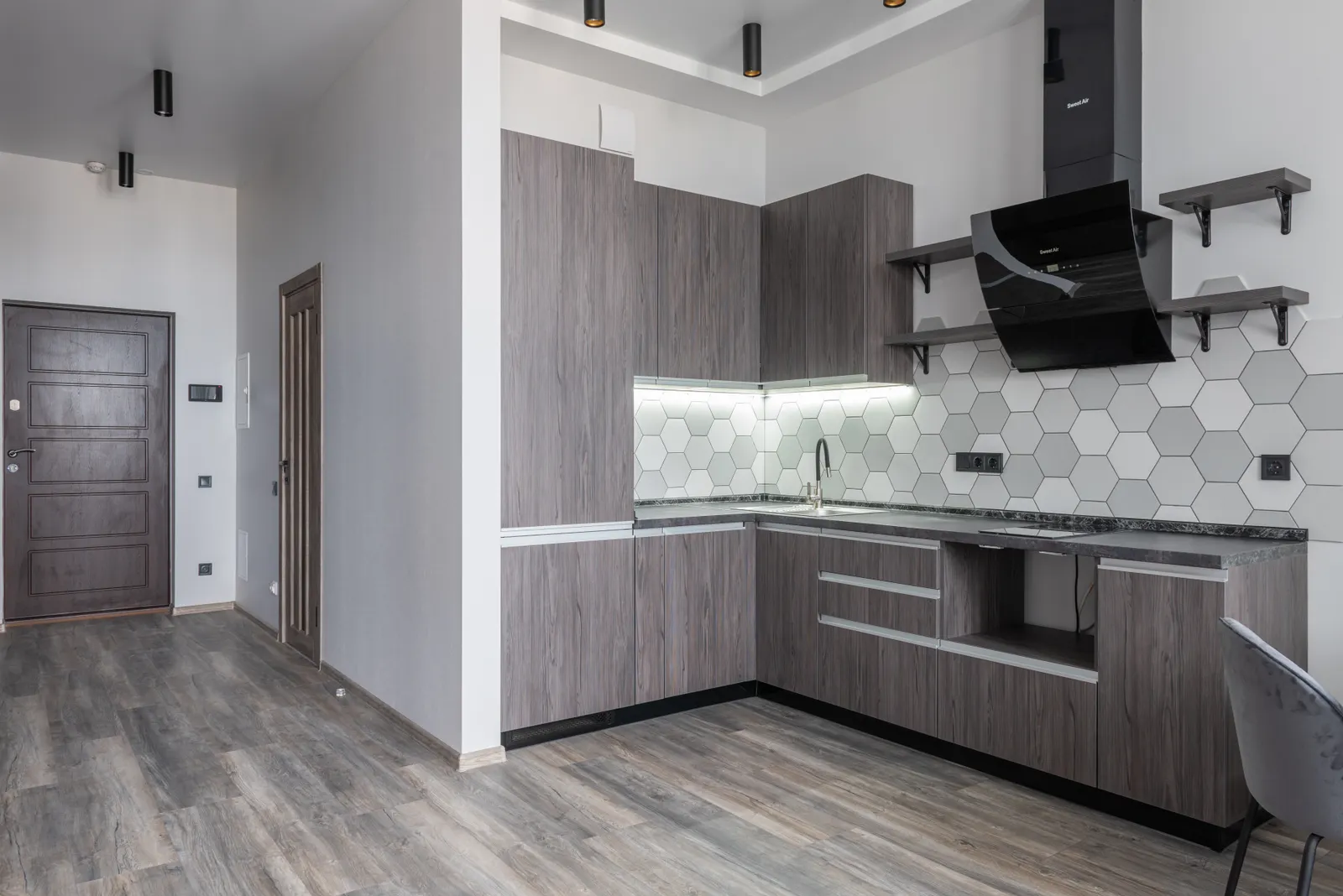
Have the supplier specify suitable hinges, latch, handles and any closer for the exact door. Check how the proposed combination feels when opening and closing, including for users who may find a heavy leaf difficult. Decorative handles should be reviewed for grip and operation, not only appearance. Avoid selecting hardware separately and expecting the installer to make everything fit later. Record the approved references and finish samples together, with responsibility for resolving any mismatch before the order is released.
Treat special performance as a separate requirement
Bathroom exposure, acoustic privacy and fire performance are different questions. Ask what the exact product is suitable for and request the relevant documentation where a performance requirement applies. Do not infer fire resistance from thickness or core type, and do not treat a moisture-related marketing description as permission for every installation condition. Where building requirements apply, have the responsible professional confirm them. This keeps a decorative choice from accidentally becoming an unsupported technical specification in the project documents.
Compare the complete installed package
Ask quotations to identify leaf, frame, architrave, hardware, finishing, removal of old components and making good around the opening. Clarify whether site adjustments are permitted by the product instructions and who takes responsibility for them. Compare alternatives using the same scope. A lower leaf price may not describe the final installed cost, while an expensive finish does not answer questions about operation. Review a physical sample and an agreed opening detail before accepting a large order for the whole house.
Inspect operation room by room
At handover, check that each door moves smoothly, latches as intended and does not conflict with furniture or adjacent doors. Compare the installed references with the schedule, and record visible damage or unfinished edges for correction. Keep care instructions and any performance documents together. Bunyady can use this room-by-room brief to coordinate doors with the interior scheme and renovation sequence. The useful outcome is a documented selection that supports each room's purpose, rather than a repeated finish with unclear construction behind it.
Your practical checklist
- List the purpose and users of every opening.
- Record core, frame and finish separately.
- Measure existing openings before ordering.
- Approve matching hardware references.
- Request evidence for any special performance claim.
- Compare installation and making-good scope.
- Inspect operation against the approved schedule.
Frequently asked questions
Is a solid-core door always solid wood?
No. Ask for the exact core and face construction. Product terminology should be clarified before comparing specifications.
Will a solid-core leaf soundproof a bedroom?
A core description alone cannot establish the room result. Request evidence for the relevant doorset and consider the wider room construction with the project team.
Can I reuse the existing frame?
Possibly, but its condition and suitability for the new leaf need inspection. Confirm that decision before ordering, including hardware and surrounding finishes.
Sources and further reading
Sources support the specific facts identified below. Planning examples and checklists are editorial guidance; photographs are illustrative.
- JELD-WEN — Manufacturer comparison of core construction, weight and sound control; no rating is inferred for an unspecified doorset.