
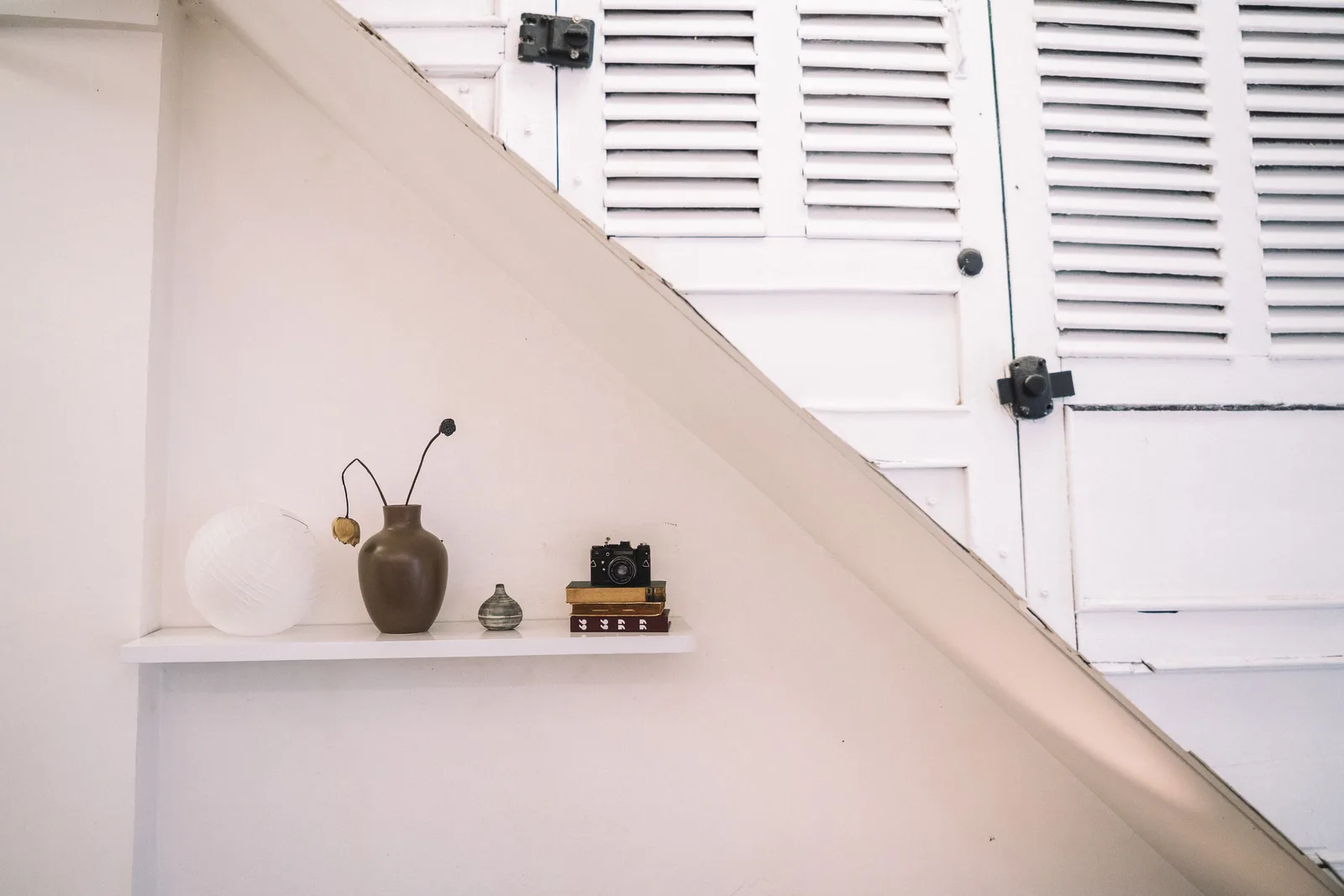
The “3-5-7 rule” is an informal decorating prompt: arrange accessories in an odd-numbered group, often three, five or seven, and see whether the grouping feels more composed than a row of unrelated objects. It is not a building requirement, a measured design standard or a promise that a particular count will look good. Google’s Saudi-region People Also Ask results displayed the question “What is the 3-5-7 rule in interior design?” on 13 November 2026. That is an observed question, not evidence of search volume or popularity.
For a home in Al Ahsa, Hofuf or Al Mubarraz, use the idea only after deciding what the surface is for. A display shelf, a console beside an entrance and a coffee table used for serving have different jobs. This guide gives you a way to test an arrangement on the actual furniture, keep useful space free and decide whether a styling rule helps your room. It is a practical exercise, not a claim that Bunyady has completed or photographed any pictured space.
What people mean by the 3-5-7 rule
The name is used for a simple odd-numbered grouping idea: place three, five or seven decorative objects together rather than spreading every small object evenly across a surface. Interior-design articles and practitioners discuss it as a styling suggestion. Their descriptions vary, which is another reason to treat it as a starting prompt rather than a universal formula. The numbers do not specify the objects, their sizes, their spacing or the needs of the household.
For practical use, think of a “group” as a few pieces that relate visually or functionally. A book, a low bowl and a taller vessel can make a three-piece starting group; two more items might be added only if the surface still feels balanced and useful. Count is an editing aid. It cannot replace checking proportion, stability, access, cleaning or the way people use the room.
Begin with the surface and what it must do
Choose one surface and name its everyday job before you gather accessories. A wall shelf may display books or objects. An entrance console may need a clear place for keys or a bag. A coffee table can be part of a serving routine, so a decorative arrangement should not take over the useful landing area. The same objects arranged in the same count can work on one surface and obstruct another.
Measure the usable top or shelf, including the part occupied by a lamp, tray or fixed fitting. Note what must remain reachable and where hands, doors, drawers, chairs or walking routes pass. In a majlis or living room used to welcome guests, set aside the area needed for cups or a serving tray before experimenting. A clear functional zone is a better first constraint than an exact number of ornaments.
Build a small group through contrast, not matching sets
Start with one anchor piece that has enough visual presence for the surface: perhaps a vase, a framed object or a short stack of books. Add one lower or smaller piece and one item with a different outline or texture. Step back and look at the trio together. The aim is a readable relationship between forms, not three products bought as a matching set. Leave room around the group so each object can be seen and handled.
If the arrangement looks too sparse, test five pieces by adding items that solve a real visual or practical need. Vary height and footprint without making every object compete for attention. A small bowl beside books may be useful as well as decorative; a plant or framed piece may create a different shape. If the new items only fill space, remove them. The styling count should follow the composition, not force additional purchases.
Seven pieces are not automatically better than three. On a narrow shelf, a short console or a busy room, seven may create clutter or make cleaning difficult. A broader display can hold a larger group if the pieces are spaced and visually organized, but the surface dimensions still matter. If objects are fragile, top-heavy or placed within reach of children or pets, prioritize stable placement and appropriate securing over the odd-number idea.
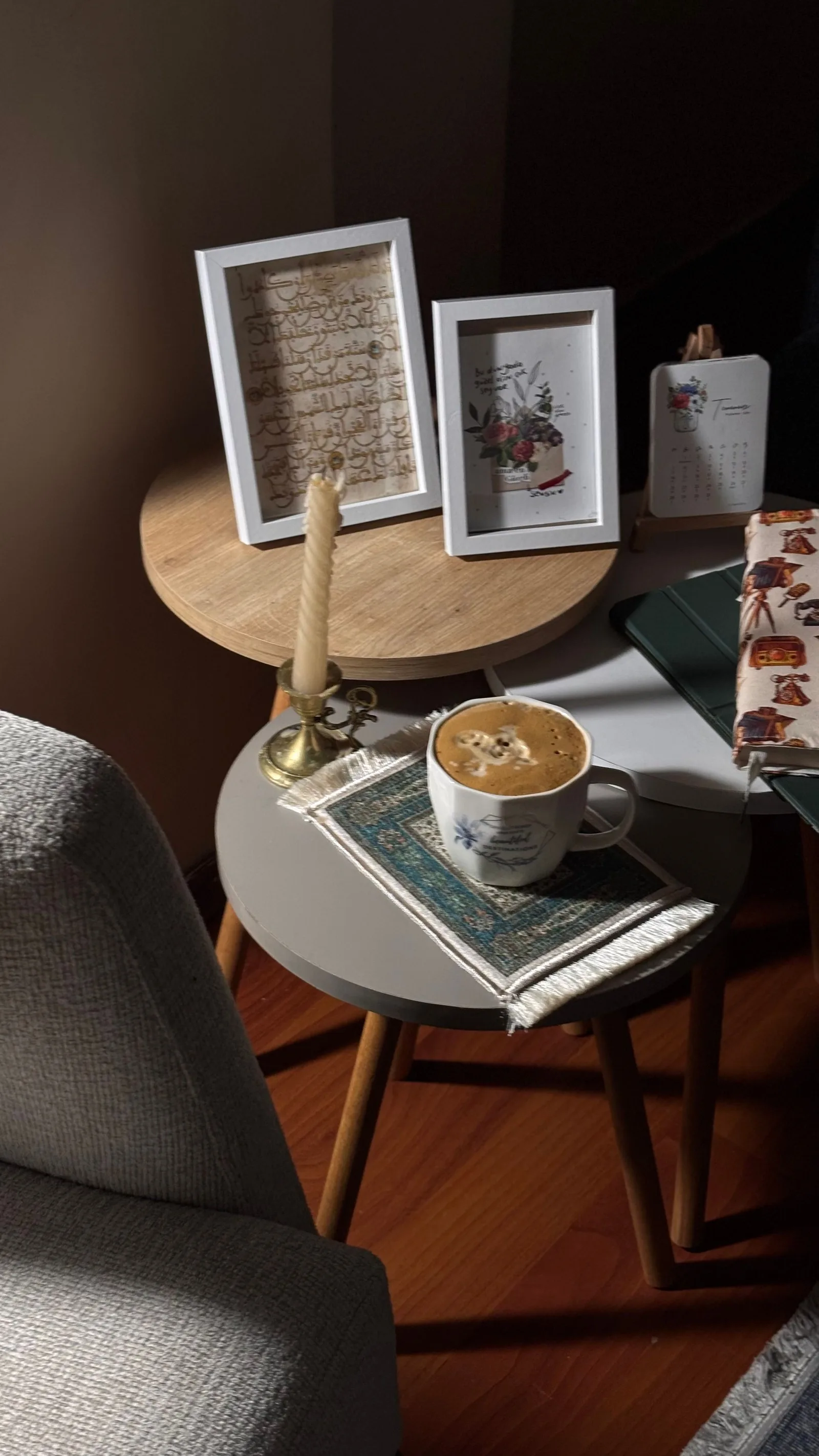
Use a simple visual check before you add more
Check the group from the main doorway and the place where people actually sit. Notice whether one object hides another, whether the arrangement seems heavier on one side and whether there is enough empty surface to make the group legible. Compare the display with the furniture around it: a tall item may relate to a nearby lamp or artwork, while a low group can preserve a view across a table. These are visual tests, not prescribed ratios.
Then check use with your hands. Can you pick up the bowl, reach the books, wipe the shelf and place a drink without moving several pieces? Can a cabinet door open, and does the arrangement stay outside the main circulation route? If the answer is no, reduce or relocate the display. A styled photograph rarely shows every daily task, so test the actual objects in the actual room rather than copying an image.
When to ignore the number
Ignore the count when the surface has a clear household purpose, when one treasured object deserves space on its own, or when a collection already has its own rhythm. A single lamp may be more useful than three decorative pieces. A pair of objects can be deliberately balanced. An asymmetrical arrangement can feel settled, and a symmetrical arrangement can also work. The homeowner’s use and the whole-room composition matter more than obeying a number.
Also pause before buying anything to complete a group. Try rearranging items already in the home, removing one piece, or moving an object to a different shelf. Take a photograph from the main viewpoint and compare it with the unstyled surface. If an interior designer is involved, ask for the proposed furniture and accessories to be identified separately from illustrative objects in a rendering. This keeps the approved scope and later purchasing decisions clear.
Make the idea useful in a real interior-design brief
If you are commissioning an interior styling or design appointment, show the designer which pieces you want to keep and how the household uses the room. Ask whether the service includes accessory selection, placement guidance, shopping references or only a concept presentation. “Styling” can mean different things in different proposals, so ask for the included deliverables in writing. Do not assume that a visualisation includes purchase, delivery or installation of every object pictured.
Request two variations for the same surface: one with a compact group and one with a more open arrangement. Keep the furniture, viewpoint and necessary clear area consistent so you can compare the actual trade-off. Ask which objects are specified, which are examples, what dimensions matter and who confirms suitability for the surface. A useful design discussion connects the styling proposal to the room plan and service scope rather than selling a fixed rule.
A quick 3-5-7 styling exercise
Clear one shelf, console or table and place the pieces you already own nearby. Choose the surface’s main job, reserve the area needed for that job and select three objects with distinct but compatible scale or form. View them from the entrance and the normal seated position. Remove an item if it blocks access or if the group reads as a row of unrelated purchases. Take a photo before adding anything.
Next, try five pieces only if the first version needs a missing height, texture or useful function. Test seven only on a surface that can hold them without crowding. Compare each version at the same viewpoint, then return the everyday-use items and repeat the reach, cleaning and circulation checks. Keep the arrangement that works best for the room, even if it contains a number other than three, five or seven.
Your practical checklist
- What is this shelf, console or table used for every day?
- Which part of the surface must remain clear for access or serving?
- Do the objects vary in scale or form without competing with one another?
- Can household members reach, move and clean around the arrangement?
- Does the group work from the doorway and the usual seated viewpoint?
- Are any displayed pieces unstable, fragile or within reach of children or pets?
- Which objects are specified in the design scope, and which are only illustrative?
Frequently asked questions
Is the 3-5-7 rule an official interior-design standard?
No. This article treats it as an informal decorative-grouping prompt. It is not a building requirement, certification or universal design standard.
Do I have to use exactly three, five or seven objects?
No. Use the count only to help edit a group. A pair, a single useful object or a more open surface may suit the room better.
Does the 3-5-7 idea work on a coffee table?
It can be a starting point, but preserve the space needed for serving, reaching and everyday use. Test the actual items on the actual table.
Should I buy extra decor to complete a group?
Not automatically. First try items you already own, remove pieces that do not help, and compare the arrangement with a clear surface.
Does an interior-design rendering mean the pictured accessories are included?
Not necessarily. Ask the provider to state whether accessory selection, product references, purchasing and installation are included in the written scope.
Sources and further reading
Sources support the specific facts identified below. Planning examples and checklists are editorial guidance; photographs are illustrative.
- Council for Interior Design Qualification — What Is Interior Design? — General description of interior-design work, including space planning, selection of materials and furnishings, documentation and coordination. Used only for service-scope context, not Saudi licensing advice.
- Pexels License — License reference for the two illustrative photos; source pages and photographers are also recorded. Photos are stock illustrations, not Bunyady projects.
- Ideal Home — 3-5-7 home styling rule — Editorial example of how the phrase is presented as a flexible styling suggestion; not a technical standard or empirical proof.
- Luxxe Interiors — What is the 3-5-7 rule in interior design? — Interior-design provider’s own explanation of the odd-number grouping idea; used to describe the informal heuristic and not as proof of a universal rule.